Why Contractors Need a Fast, Mobile-Friendly Website to Win More Leads in 2026
Contractors do not lose most leads because they lack skill. They lose them because the customer journey is impatient, mobile, and brutally practical.
A homeowner notices a wet ceiling at 9:40 p.m. A property manager needs an electrician before tenants start calling. Someone searching for a kitchen and bath remodeling company is comparing three firms while standing in their current kitchen, phone in hand, trying to decide who feels credible enough to invite over. In each case, the website becomes the first jobsite inspection. If it loads slowly, feels clumsy on a phone, or hides basic contact details, the prospect moves on.
That shift has been building for years, but by 2026 the expectation is fixed. A contractor website that generates leads is no longer a nice marketing extra. It is part of sales operations. It supports your Google Business Profile for contractors, reinforces your service area, gives Google usable business signals, and helps customers take the next step without friction. If the site is weak, every other channel works harder for worse results.
Speed is not a design preference, it is a lead filter
Most contractors hear "fast website" and think of technical vanity. What matters is simpler than that. Fast sites keep people from dropping off before they call, book, or submit a form.
Google’s own guidance gives clear performance targets through Core Web Vitals. Good results are generally associated with an LCP under 2.5 seconds, an INP under 200 milliseconds, and a CLS under 0.1. Those are technical measurements, but the lived experience is easy to recognize. The page appears quickly, buttons respond promptly, and the layout does not jump around while someone tries to tap the phone number.
For home service businesses, that matters more than in many industries because urgency is common. A water damage restoration website design has very different stakes from a lifestyle brand. If someone is dealing with water intrusion, they are not browsing for inspiration. They are trying to solve a problem before it gets worse. The same goes for foundation repair, electrical issues, and plumbing. A slow page can feel like a closed office.
I have seen contractors focus heavily on ad spend while overlooking speed basics. They buy traffic, rank locally, and even earn strong reviews, then wonder why calls do not match the visibility. Often the answer is not exotic. Heavy images, bloated page builders, pop-ups that cover the screen, or a mobile layout that makes the contact button hard to find can break intent at the exact moment it should become a lead.
Google also treats page experience as broader than speed alone. Mobile friendliness matters. HTTPS matters. Intrusive interstitials that interfere with the main content work against the user experience. Contractors sometimes underestimate that last point because they want every visitor to see a coupon, a financing offer, or a full-screen form. But if that prompt blocks the actual service page on a small phone screen, the result is not more conversions. It is irritation.
Mobile is the real storefront for most service area businesses
Many contractor owners still review their site on a desktop monitor in the office. Their customers usually do not.
For a service area business, the site has to perform on a phone in the driveway, at work, in bed, or during a stressful event. That changes what good design looks like. Mobile-first design is not just shrinking desktop content. It means building pages around the smallest, most time-sensitive decision path.
A strong plumbing website design on mobile lets someone confirm three things almost immediately: do you serve their area, do you handle their problem, and how do they contact you right now? An effective electrician website design does the same, especially when the issue may involve safety. A foundation repair website design often needs to reassure a more research-oriented customer, but it still must make the initial path easy. The same principle applies to solar company website design, fence contractor website design, and kitchen and bath remodeling website design, even though those purchases are less urgent. The timeline changes. The mobile behavior does not.
That is why the best-performing contractor sites tend to feel simpler than owners expect. They do not bury service pages. They do not make visitors pinch and zoom. They do not hide the phone number in a menu. They do not force a long contact form before revealing basic information. The site does not need to impress another marketer. It needs to remove hesitation for a homeowner.
Local trust starts on Google, but it often closes on your site
When contractors ask how to get more leads for contractors in 2026, the conversation often starts with ads or reviews. Fair enough. But for most local service businesses, the chain is connected. Search visibility, map visibility, reviews, speed, and conversion all affect each other.
A verified Google Business Profile helps customers find a business on Search and Maps. It can show hours, phone number, website, and other ways to connect. That means your profile and your site are not separate assets. They are a handoff. Google helps the customer discover you, then your website has to confirm you are the right fit and make contacting you easy.
For contractors that operate as service area businesses, Google allows a profile with one central office or location and a designated service area. If you do not meet customers at your address, the address should be hidden, and the profile should still include a phone number or website representing that location. That matters because many contractors either misunderstand the setup or leave it half-finished. Then they wonder why their visibility is inconsistent or why customers are confused about where they work.
Google also recommends keeping service areas accurate and specific. Service-area businesses can define them by cities, ZIP codes, or other places served. On the website side, that creates a practical opportunity. If you truly serve multiple nearby locations, your site should reflect that clearly. Not with thin, copy-pasted pages stuffed with place names, but with useful service area pages that help both users and search engines understand where you work.
This is where local SEO for home service businesses stops being abstract. A contractor lead generation website should align the basics across the profile and the site: business name, phone, hours where appropriate, service area, and real service information. Google’s local business structured data guidance also makes it clear that websites can mark up local business websites for contractors and trades information such as hours, address, phone, geo details, and departments. That does not replace good content or strong operations, but it helps Google interpret your business information correctly.
The best contractor websites answer the questions people ask before they call
A lot of websites fail because they try to be too broad. They talk about quality, craftsmanship, and customer satisfaction in language that could fit any company in any trade. That kind of copy rarely helps a nervous homeowner decide.
The pages that generate leads tend to do something more useful. They match real search intent and real buyer concerns.
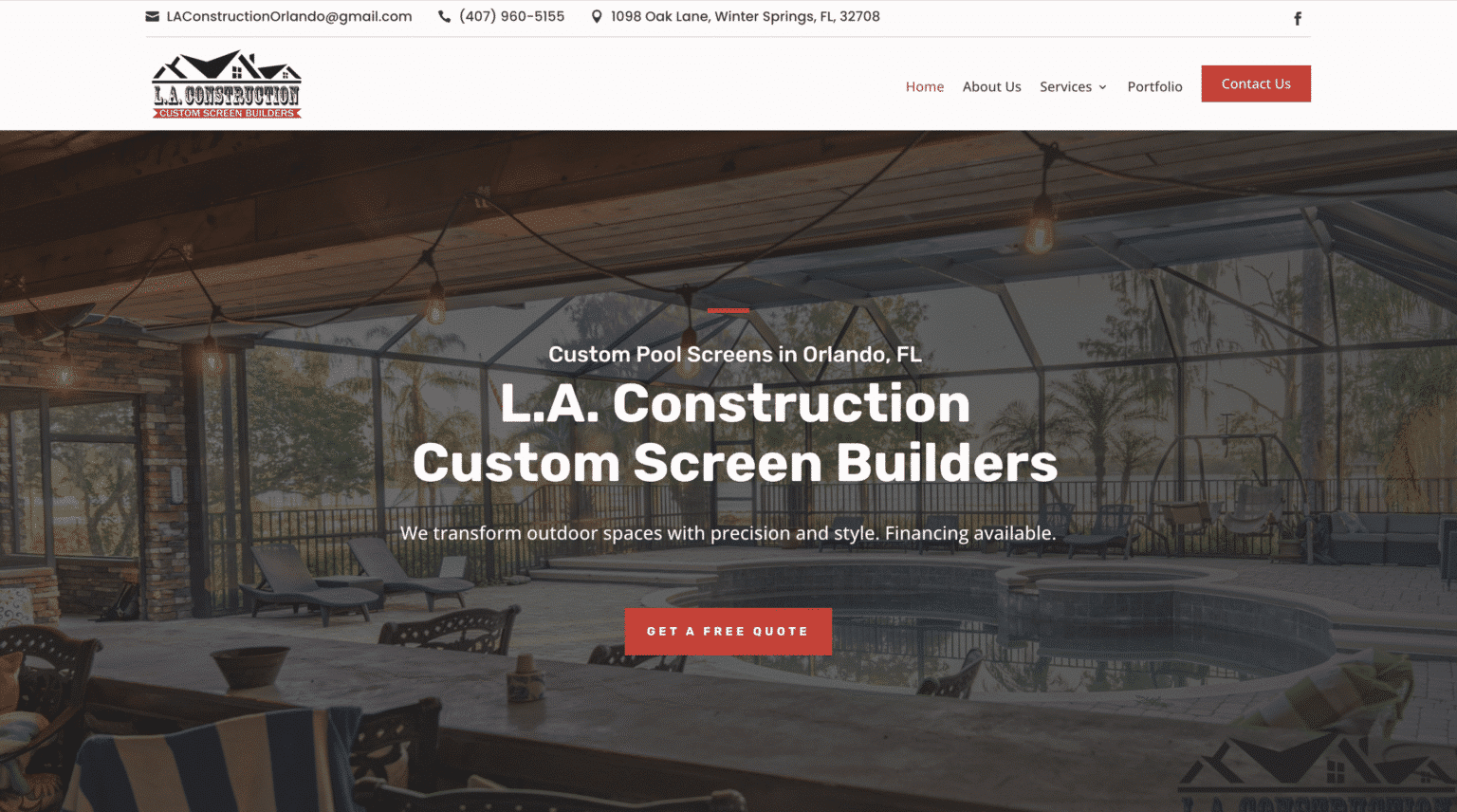
Someone looking at water damage restoration website design needs speed, availability cues, and confidence that you handle the type of damage they are facing. Someone comparing kitchen and bath remodeling website design is usually looking for process clarity, style alignment, and enough trust to schedule a consultation. A homeowner searching foundation repair website design may be trying to understand symptoms before deciding whether the issue is serious. Different trades need different page strategies, but the principle is the same: write for the customer’s next decision, not for your own brochure.
That usually means each core service deserves its own focused page. The page should be publicly accessible and not blocked if you want it indexed. That sounds obvious, yet contractors routinely launch redesigned sites with important pages hidden behind scripts, blocked by technical settings, or buried so deeply they may as well not exist. Google’s technical guidance is straightforward here. If a page is not accessible, it cannot do much for search.
A solid service page also respects the mobile context. Short sections. Clear service language. Tap-friendly buttons. Supporting proof without clutter. Most visitors do not need a wall of text before they can call. They need enough specificity to feel confident.
Reviews and responsiveness shape whether traffic becomes revenue
Contractors often ask for more traffic when the bigger leak is response quality. You can rank well, have a decent site, and still lose opportunities if review practices are sloppy or follow-up is slow.
Google’s review guidance is stricter than some businesses realize. Reviews must reflect genuine experiences. Incentives for reviews are prohibited. Businesses are encouraged to ask customers to leave reviews, use a Google review link or QR code, and respond promptly. Those are not minor details. They directly affect trust. A strong review profile tells a new customer that real people hired you and felt strongly enough to say so. Thoughtful responses reinforce that there is an organized business behind the listing.
Then there is speed after the click. Google’s local services and lead handling guidance makes clear that missed-call handling matters, and replying quickly to leads is supported directly in Google’s lead management tools. Even outside paid lead channels, the lesson is universal. Contractors lose business in the first minutes, not the first week.
A fast website supports that responsiveness in subtle ways. It can reduce abandoned calls by making the phone number easy to use. It can route people to the right service page so they submit better-qualified requests. It can give after-hours visitors enough confidence to leave a form or voicemail instead of bouncing to a competitor.

Here is a simple set of signals that a site is helping, not hurting, your lead flow:
- The phone number is obvious on mobile without scrolling much.
- Service pages clearly state what you do and where you do it.
- The site loads quickly and remains stable while a visitor taps around.
- The Google Business Profile and website point to the same core business information.
- Review collection is based on real customer requests, not gimmicks.
Those are not glamorous fixes. They are the operational basics that tend to separate websites that merely exist from a contractor website that generates leads.
Different trades need different conversion paths
One mistake I see often is copying a website structure from another trade without considering buyer behavior.
Plumbing website design usually benefits from urgency-driven layouts. Visitors may need immediate help, so contact pathways have to be dominant. Electrician website design can be similar, especially for outage, panel, or safety concerns, though some electrical work is planned and commercial. Water damage restoration website design often needs to move even faster because every delay feels costly to the customer.
Kitchen and bath remodeling website design is different. Those buyers usually spend more time evaluating fit, style, and confidence. They may care less about a giant emergency call button and more about process explanation, scheduling clarity, and signs of professionalism. Solar company website design often involves longer consideration, more comparison, and more education. Fence contractor website design may fall somewhere in the middle, depending on whether the buyer is replacing storm damage or pricing a planned project. Foundation repair website design usually needs careful reassurance because customers may feel both urgency and skepticism.
What does not change is the mobile expectation. Every one of those customers still expects a site that loads quickly, feels easy to use, and tells them what to do next. The conversion path may differ, but the technical and usability baseline does not.
Service area pages work when they are accurate, not inflated
Many contractors have heard that local pages help with visibility. That is true only when they reflect reality and provide value.
Google’s guidance on service areas emphasizes accuracy and specificity. If you serve certain cities or ZIP codes, represent that honestly in your Business Profile and your website. Do not try to claim every market within driving distance if your crews do not actually support it well. A broad map may look ambitious, but a disappointed caller who learns you do not really cover their area is not a lead. It is friction.
Useful service area pages do a few things well. They identify the place served. They connect that place to real services offered. They make it easy for someone there to contact you. And they avoid the old trap of swapping city names into duplicate text. That kind of thin content rarely helps users, and it usually reads exactly like what it is.
A better approach is to write naturally about how your service works in the area, what types of projects you take on, and how someone should reach you. Pair that with strong core service pages and a properly configured Google Business Profile for contractors, and you build a more coherent local presence.
What to fix first if your website gets traffic but not enough calls
Not every contractor needs a full redesign. Sometimes the site already has enough authority or enough local visibility. The problem is friction.

Start by checking the pages that matter most on a phone, using an ordinary mobile connection rather than office Wi-Fi. Watch for the obvious failures. Does the page load promptly? Does the layout jump? Is the main call-to-action visible? Can a visitor tell within a few seconds whether you serve their area? Is the page blocked by a pop-up or cluttered with too many options?
Then compare your Google Business Profile and website side by side. The business details should line up. The website should support the profile, not confuse it. If you are a service-area business and do not meet customers at your address, the profile setup should reflect that properly. Your site should reinforce the same service area reality.
Finally, look at how you handle inquiries. A fast site creates opportunity, but operations close the loop. If calls go unanswered or form responses lag, marketing efficiency drops fast.
This short triage list is where I would begin:
- Improve mobile load speed and visual stability on the highest-traffic pages.
- Make contact actions easier to find and use on a phone.
- Clean up service area messaging so visitors know whether you serve them.
- Align the site with your Google Business Profile details and service setup.
- Ask real customers for reviews consistently and respond promptly.
Those changes are rarely as exciting as a total rebrand. They are usually more profitable.
The 2026 standard is simple: useful, fast, and easy to trust
A contractor website in 2026 does not need to be flashy. It needs to work under real conditions. It should support your local visibility, especially through your Google Business Profile. It should help Google understand your business through accessible pages and clear local information. It should meet modern page experience expectations, especially on mobile. And above all, it should help a stressed, busy, skeptical customer decide that contacting you is the smart next move.
That is the real job of a contractor lead generation website. Not to win awards, not to impress peers, and not to bury the visitor under marketing language. Just to remove doubt quickly enough that the lead does not go elsewhere.
Contractors who treat the website as part of field operations usually outperform those who treat it like a digital brochure. They understand that every delayed load, hidden button, mismatched service area, and missed review request has a cost. They also understand that small improvements compound. Better mobile pages support better local SEO for home service businesses. Better profile alignment improves trust. Better trust improves contact rates. Better response speed turns that contact into booked work.
If you are serious about how to get more leads for contractors, that is where the leverage is. Fast pages. Clear service area coverage. Accurate profile setup. Honest reviews. Easy mobile contact. The companies that get those fundamentals right will not just look better online in 2026. They will win more of the jobs already searching for them.
Corrections
Spot something wrong? Send it to the desk and it gets fixed in the open.